Published Oct 2, 2026 in Alternatives
6 Best Lovable Alternatives in 2026: Ranked and Compared

Author: Ideavo Team
The best Lovable alternative in 2026 is Ideavo for builders who want a free core platform, predictable costs and their own AI provider instead of credit metering. Bolt has the most generous simple free tier, v0 produces the best React and Next.js code, and Replit is the natural step up when a project needs real engineering.
Lovable is genuinely good at its job: plain-language prompts come back as coherent, well-designed web apps more often than with any competitor. People leave for two predictable reasons. Credits are metered by task complexity, so a month of building is hard to budget, and apps that outgrow landing-page territory — real backend logic, complex permissions, integrations — start fighting the tool.
This guide compares six alternatives on free tier, pricing, code export and honest weaknesses. Prices and limits were checked on October 1, 2026.
Lovable alternatives at a glance
| Rank | Tool | Best for | Free tier | Paid from | Code export |
|---|---|---|---|---|---|
| 1 | Ideavo | Predictable costs + your own AI key | Free core builder | $20/month Pro | Yes; export and GitHub sync |
| 2 | Bolt | Simple, generous browser tier | 300K tokens/day, 1M/month | $25/month | Yes |
| 3 | v0 | React and Next.js code quality | $5 monthly credits | $30/user/month | Yes; GitHub sync |
| 4 | Replit | Full cloud dev workspace | Limited Starter plan | $20/month billed annually | Yes; Git-backed projects |
| 5 | Base44 | Internal business apps | 25 messages + 100 credits/month | $16/month billed annually | Yes; two-way GitHub sync |
| 6 | FlutterFlow | Mobile and app-store releases | 2 projects, 5 AI generations | $39/month for export | Paid plans only |
Is Lovable still worth it in 2026?
If your project is a web MVP where polish and speed matter, yes — Lovable's first drafts still set the standard for how an AI-built app should look, and its credit system is more flexible than a fixed message count. The question is whether your usage pattern fits credit metering.
What Lovable does well
- The best-looking generated apps in the category, with layout, spacing and copy that usually need only small corrections
- Credit costs that scale with task size — a small style tweak and a full generated page are priced differently, not identically
- GitHub sync and clear language that you own the code you create
Where Lovable struggles
- Budgeting: because credits depend on what the model decides a task is worth, a month of "just one more change" is hard to predict
- The free tier's 30 monthly credits disappear in a couple of working sessions
- Deep backend logic, complex permissions and unusual integrations fight the guided workflow
If you recognized your situation in those last three lines, the alternatives below are ranked for you.
1. Ideavo — best Lovable alternative for predictable costs and code ownership

Ideavo replaces credit metering with a different split: the builder is free, and you connect the AI access you already pay for through bring your own key. Your provider bills model usage directly, with no platform markup, so your platform cost stays flat no matter how many changes you make.
Generated code is editable and portable. You can import public or private GitHub repositories, track branches, push changes and continue in any editor, with a browser IDE, live previews and isolated cloud sandboxes in between.
Pricing: the core builder is free. Optional Pro is $20/month for an ad-free experience, collaboration and parallel tasks. Model usage is billed by your provider.
The catch: there is no bundled allowance — you need your own AI subscription or API key, so "free" assumes you already have model access.
Best for: teams that already pay for Claude, GPT or Gemini and want their platform bill to stop scaling with iteration. The why Ideavo is free post explains the model in full.
2. Bolt — best simple and generous free tier
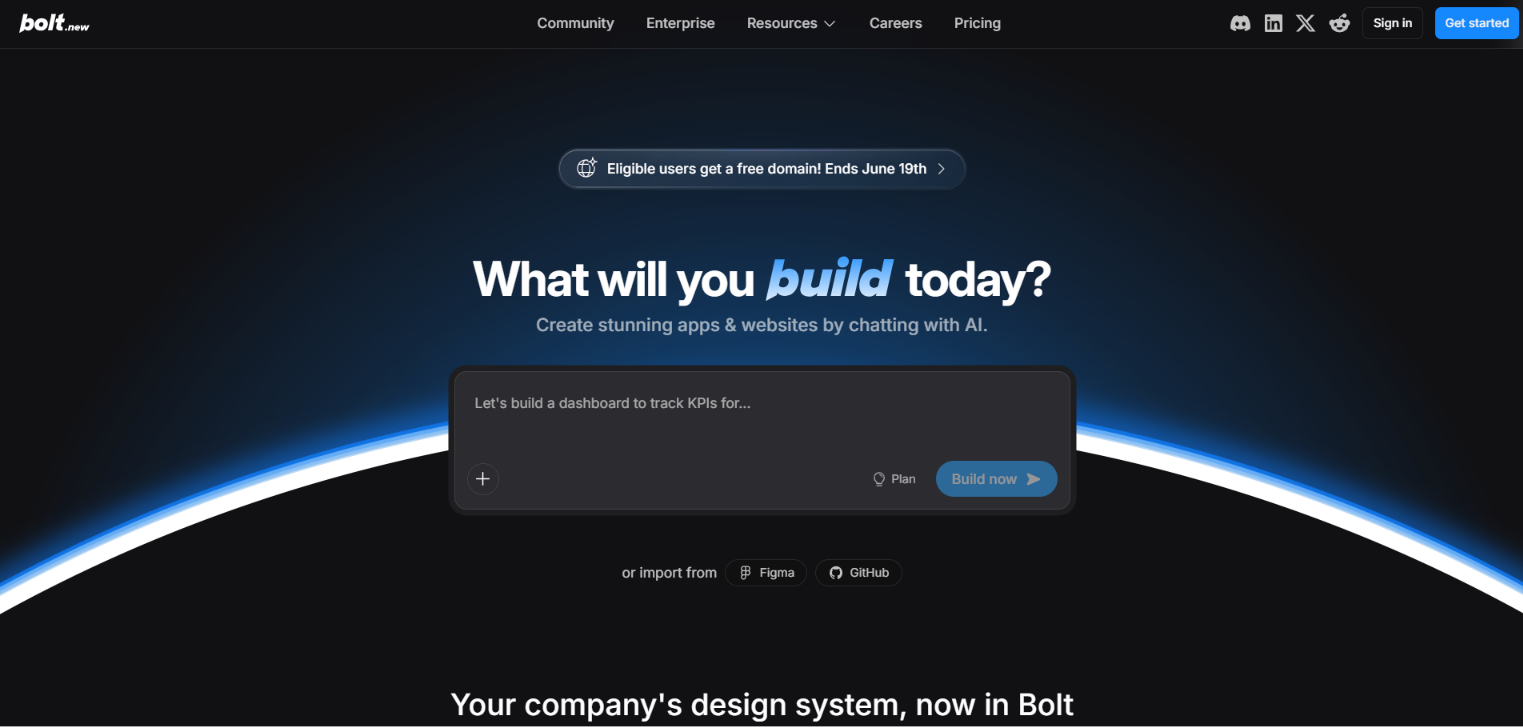
Bolt answers credit ambiguity with a flat number: 300,000 tokens per day and 1 million per month on the free plan, with hosting and unlimited databases included. You can sit down and build for a whole evening without decoding a credit table.
The trade is the classic Bolt one — tokens fund the entire conversation, including context resends, file reads and retries, so the allowance devalues as your project history grows. Pro starts at $25/month for roughly 10 million monthly tokens.
The catch: long debugging sessions burn tokens without producing new features, and costs rise with codebase size.
Best for: browser-first builders who want a simple allowance they can reason about. See Lovable vs Bolt for a head-to-head.
3. v0 — best for React and Next.js code quality
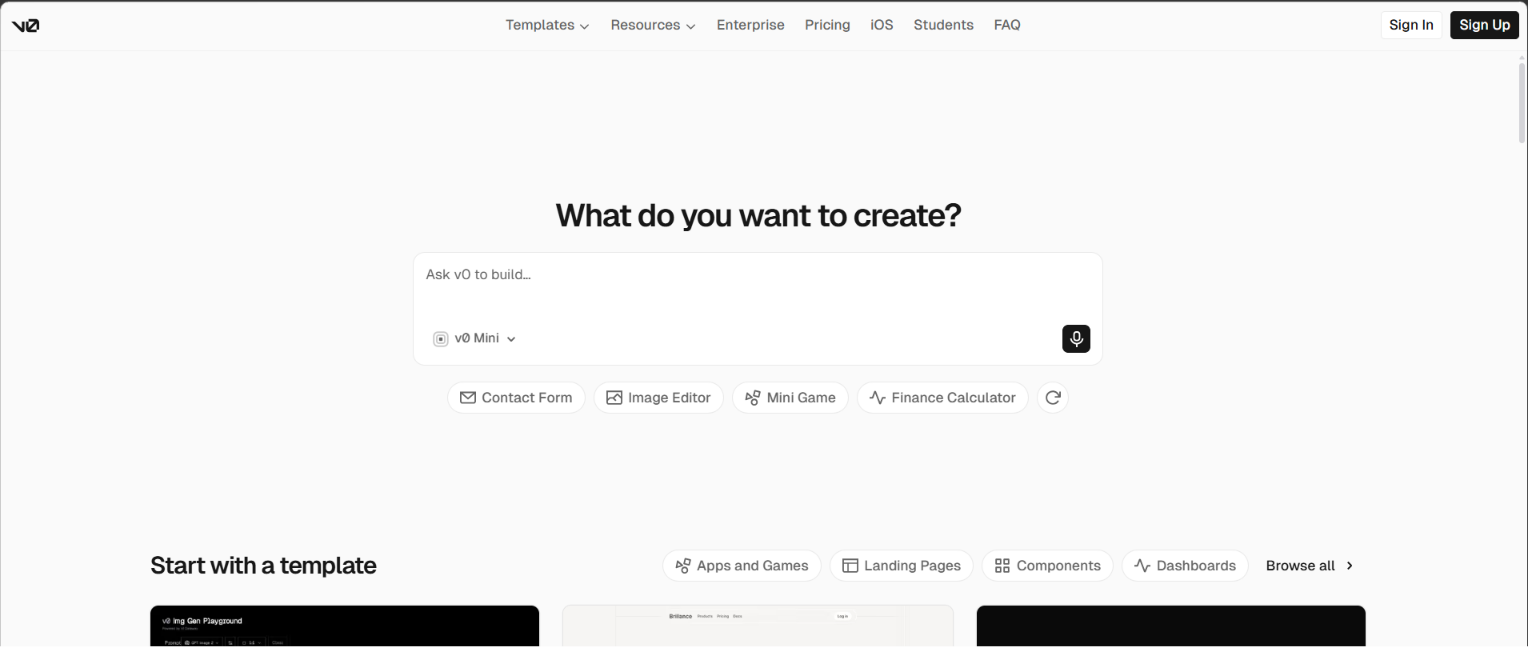
v0 matches Lovable's polish for React interfaces and frequently beats it on code structure — the output reads like something a Next.js developer wrote on a good day. GitHub sync, Vercel deployment and a design mode for visual adjustments make it a complete workflow.
Pricing: Free includes $5 in monthly credits and up to 7 messages per day. Plus is $30 per user per month with $30 in monthly credits plus $2 in daily login credits.
The catch: the happy path is Next.js on Vercel; other frameworks are second-class. Credits are dollar-denominated model usage, so heavy tasks eat the allowance fast — budgeting is no easier than Lovable's.
Best for: teams on the Vercel stack. The Lovable vs v0 comparison covers the pair directly.
4. Replit — best full development workspace
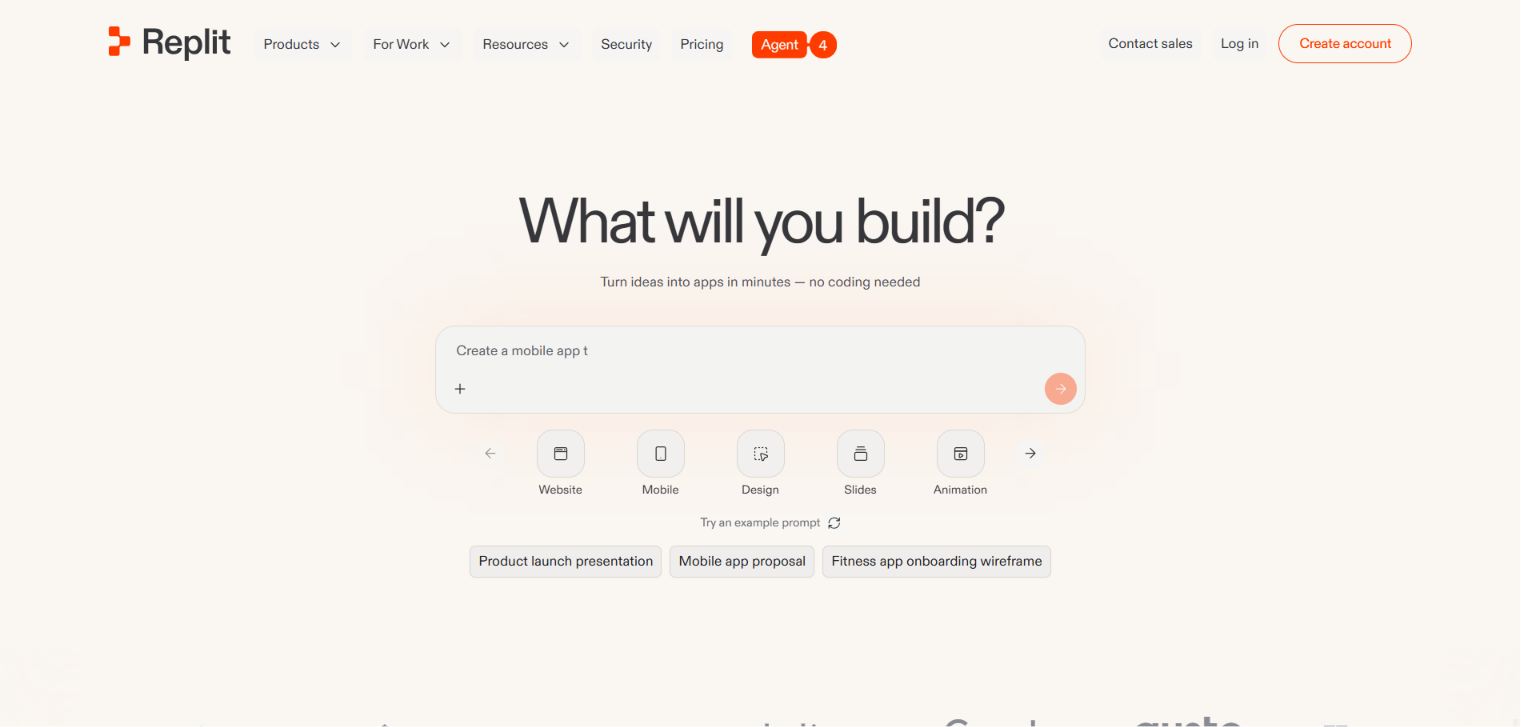
When a Lovable app needs work that goes beyond prompting — real debugging, tests, a proper editor — Replit is the graduated environment: editor, runtime, database, authentication and deployment in one browser workspace. Replit Agent still covers the prompt-to-app path when you want it.
Pricing: Starter is free with limited access. Core costs $20/month billed annually ($25 monthly) and includes $25 in monthly Agent credits. Pro is around $100/month.
The catch: Agent credits deplete quickly on complex projects, and usage pricing is even less predictable than Lovable's credits.
Best for: builders who have outgrown prompt-only tools and want a place to actually work on the code. See Lovable vs Replit for that pair.
5. Base44 — best for internal business apps
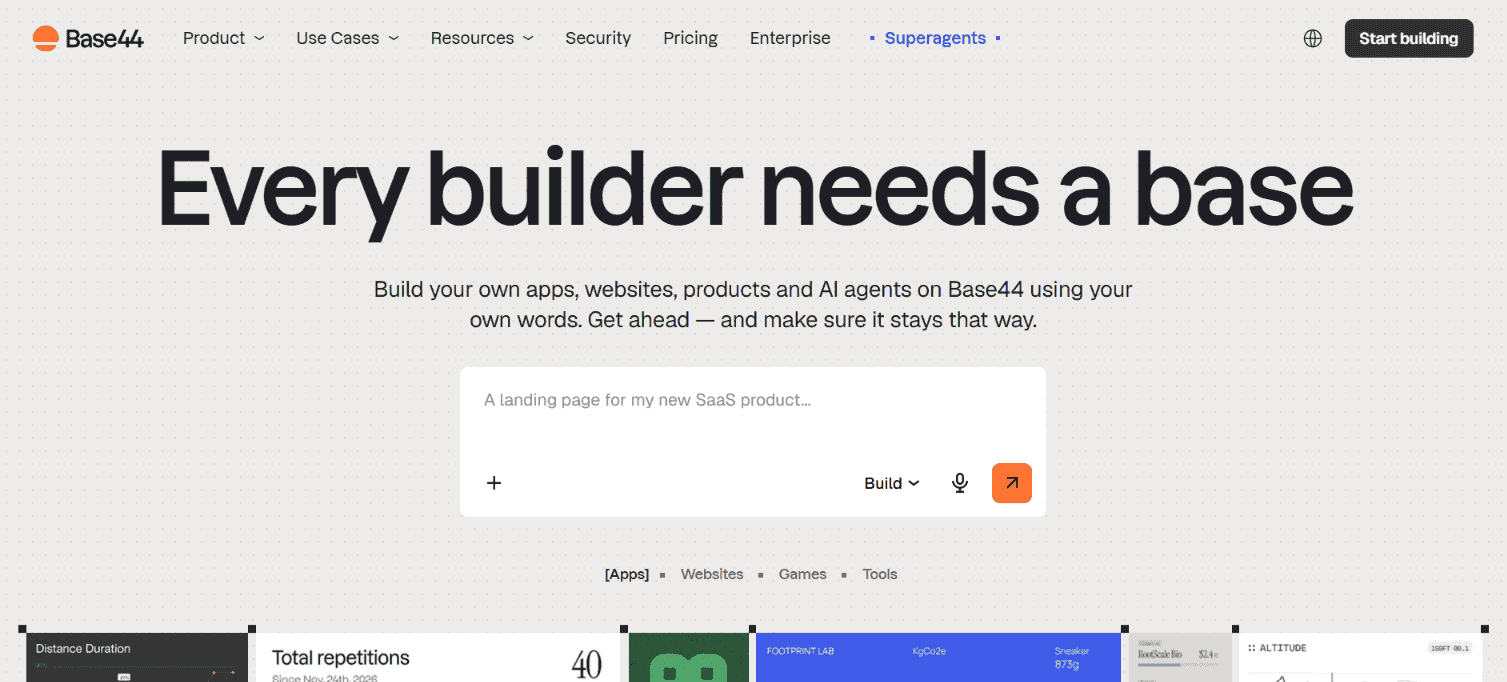
Base44 plays a different position than Lovable: instead of maximizing first-draft beauty, it ships internal tools — portals, dashboards, approval flows — with authentication, a database and analytics included even on the free plan.
Pricing: Free includes 25 message credits, 100 integration credits per month and up to five apps. Starter is $16/month billed annually with 100 messages and 2,000 integration credits. Two-way GitHub sync exports full source.
The catch: a smaller ecosystem, less design finesse and less control over your stack than code-first options.
Best for: operations teams that need working internal tools this week, not a consumer-grade landing page.
6. FlutterFlow — best for mobile and app-store releases
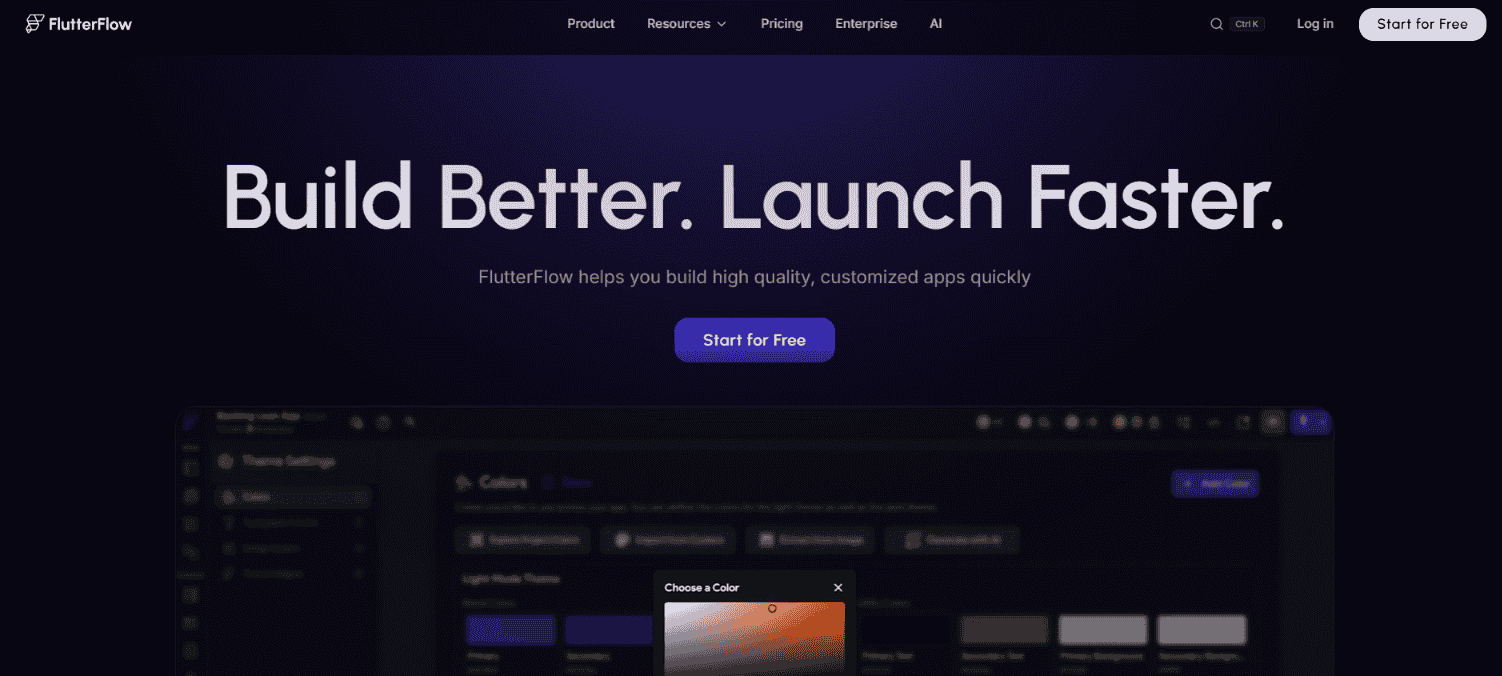
When the deliverable is an app on the App Store or Google Play, web-first builders like Lovable reach for wrappers. FlutterFlow is the reverse: a visual builder around Flutter that targets mobile, web and desktop natively, with a real component system and Firebase integration.
Pricing: Free includes two projects and 5 lifetime AI generations. Code export starts on Basic at $39/month, and GitHub integration starts on Growth at $80/month for the first seat.
The catch: AI generation is nearly absent from the free tier, and export — the reason you would choose it — is a paid feature.
Best for: teams whose real requirement is a native mobile app rather than a web app that fits a phone screen.
Lovable pricing explained
| Plan | Price | Credits and notes |
|---|---|---|
| Free | $0 | 5 credits/day capped at 30/month, plus 20 monthly Cloud credits |
| Pro | $25/month | 100 monthly credits, 5 daily bonus credits, 1-month rollover, custom domains |
| Business | from $50/month | Higher allowances and team features |
| Top-ups | from ~$15 | One-off credit packs when a month runs dry |
A Pro plan's 100 credits is enough for one focused MVP month and tight for an ongoing product, because full-page generations with images consume far more credits than small edits. If your app will need sustained iteration, metered credits are the cost line most likely to surprise you.
How to choose the right Lovable alternative
- Choose Ideavo if you already pay for AI access and want your platform bill flat while you iterate freely.
- Choose Bolt if you want a generous free tier with one simple number attached to it.
- Choose v0 if your app is React/Next.js and code quality matters more than visual first drafts.
- Choose Replit if the next phase of your project is real engineering, not more prompting.
- Choose Base44 if the app is an internal business tool with routine needs.
- Choose FlutterFlow if the deliverable is an app-store release.
Before committing, rebuild one small slice of your current project in the two finalists: a signed-in task list where each user sees only their own tasks after a refresh. Compare where the data lives, how failed saves surface, what a month of changes costs, and whether a developer could take the code from there. The best free AI app builders ranking covers the free tiers in more depth.
Frequently asked questions
Common questions about switching away from Lovable.
What is the best free Lovable alternative?
Ideavo is the strongest free alternative if you already have AI access, because the core builder is free and connects to your own provider, and Bolt's free tier of 300K tokens per day is the most generous simple browser allowance.
How much does Lovable cost in 2026?
Lovable Free includes 5 daily build credits capped at 30 per month. Pro costs $25/month with 100 credits plus a 5-credit daily bonus, with credits rolling over for one month. Business plans start at $50/month, and top-up credit packs start around $15.
Which Lovable alternative lets me use my own AI key?
Ideavo is built around bring-your-own-key, routing requests to your provider at its own rates. Cursor also pairs with your own model subscription or API key, while Bolt, Lovable, v0 and Replit bundle model access into their plans.
Can I export my code from Lovable?
Yes. Lovable states you own the code you create and supports GitHub sync. The practical test is what happens after export: run the project outside the platform, apply a small change, and deploy it independently before you rely on that path.
Why do Lovable credits run out so fast?
Lovable meters by task complexity rather than message count, so a full-page generation with images consumes far more credits than a small style change. Repeated corrections, re-edits and image generation compound quickly across a working session.
Is Lovable good for full-stack apps?
For moderate full-stack web apps, yes — it integrates databases, authentication and hosting. Apps with complex permissions, heavy business logic or unusual integrations tend to fight the guided workflow, which is the most common reason teams switch.