Published Oct 2, 2026 in Alternatives
6 Best Bolt.new Alternatives in 2026: Ranked and Compared
Author: Ideavo Team
The best Bolt.new alternative in 2026 is Ideavo for builders who want a free core platform, editable code, GitHub sync and the freedom to use their own AI provider. Lovable is the strongest pick for design-led web apps, v0 fits teams already on Next.js and Vercel, and Base44 handles internal business tools with a managed backend.
Bolt earned its audience by making the jump from prompt to running app almost unfairly fast. The complaints that push people away are just as consistent: daily token limits that arrive mid-project, tokens consumed by long conversations rather than new features, and a debugging loop that gets expensive once the codebase grows.
This guide compares six real alternatives on the things that decide your outcome: free tier, pricing, code export and what each tool is genuinely bad at. Prices and limits were checked on October 1, 2026.
Bolt.new alternatives at a glance
| Rank | Tool | Best for | Free tier | Paid from | Code export |
|---|---|---|---|---|---|
| 1 | Ideavo | Code ownership + your own AI key | Free core builder | $20/month Pro | Yes; export and GitHub sync |
| 2 | Lovable | Polished, design-led web apps | 5 credits/day, 30/month | $25/month | Yes; GitHub workflow |
| 3 | v0 | Next.js and Vercel teams | $5 monthly credits | $30/user/month | Yes; GitHub sync |
| 4 | Replit | All-in-one cloud workspace | Limited Starter plan | $20/month billed annually | Yes; Git-backed projects |
| 5 | Cursor | AI inside your own repository | Limited Hobby plan | $20/month | It is your code from day one |
| 6 | Base44 | Business apps, managed backend | 25 messages + 100 credits/month | $16/month billed annually | Yes; two-way GitHub sync |
Is Bolt.new still worth it in 2026?
For many projects, yes. Bolt's free tier remains one of the most straightforward allowances in the category, and the core loop of prompt, preview and deploy has few equals. The real question is whether your project fits inside its limits.
What Bolt does well
- The shortest path from a prompt to a running full-stack app in a browser
- An allowance you can actually reason about: 300,000 tokens per day and 1 million per month on the free plan
- Hosting, databases and deployment built in, so the first live version is minutes away
Where Bolt struggles
- Tokens are consumed by conversation history, file operations and retries, not just new features, so costs climb as a project grows
- The 1 million monthly cap arrives quickly on anything beyond a prototype
- Debugging a large generated codebase through chat gets slow and expensive
If those struggles match your project, the six alternatives below are ranked for you.
1. Ideavo — best Bolt.new alternative for code ownership and model freedom

Ideavo takes a different approach to pricing: the builder itself is free, and you connect the AI access you already have. With bring your own key, requests go to your chosen provider, which bills you directly with no platform markup on top.
The generated code stays editable and portable. You can import existing GitHub repositories, push branches back, and continue the project in any editor. A browser IDE, live previews and isolated cloud sandboxes cover the middle ground between prompting and hand-editing files.
Pricing: the core builder is free. Optional Pro is $20/month for an ad-free experience, collaboration and parallel tasks. Model usage is billed by your provider.
The catch: there is no bundled prompt allowance. You need your own AI subscription or API key, so the full experience is not zero-cost for everyone.
Best for: builders who want the repository to outlive the builder, and teams that already pay for Claude, GPT or Gemini access. See how Ideavo's free model works for the details.
2. Lovable — best for polished, design-led web apps
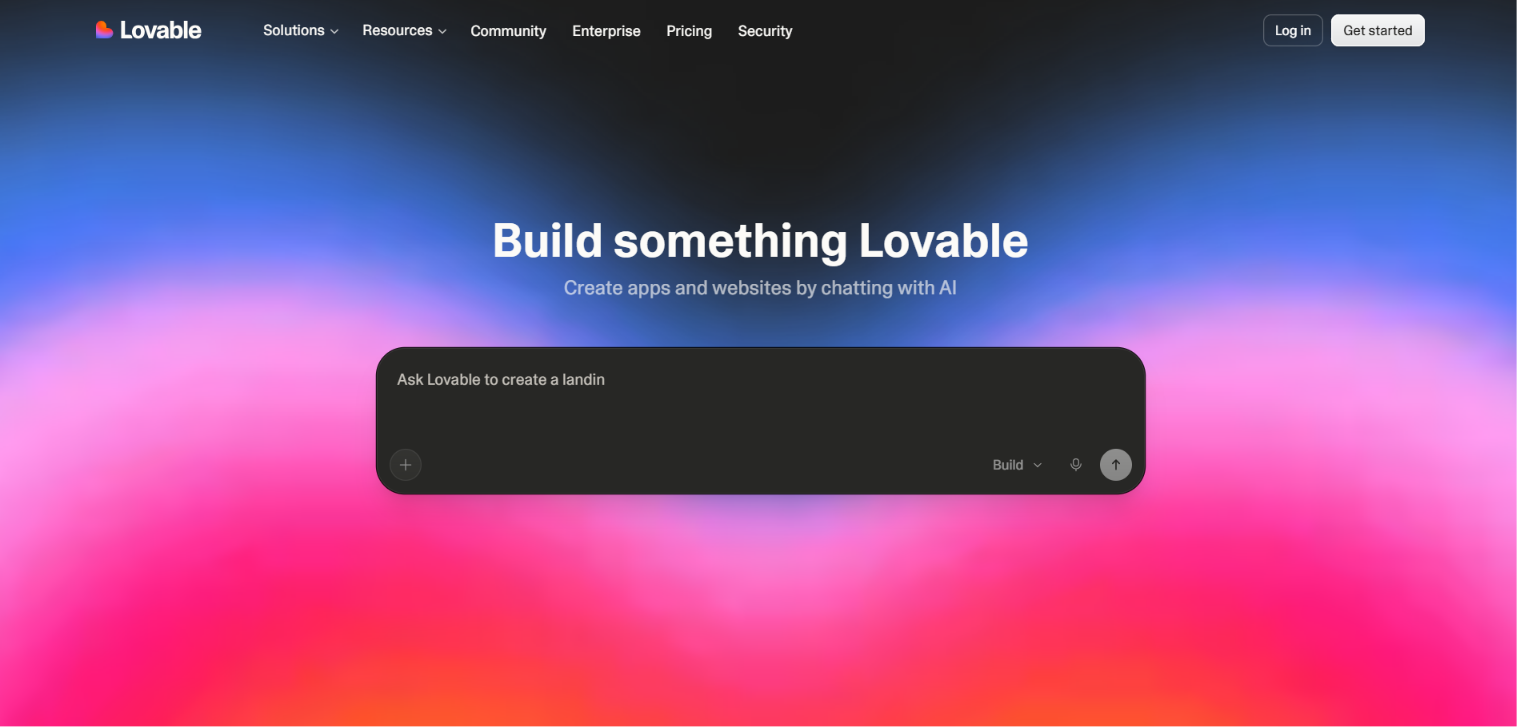
Lovable is the alternative when your problem with Bolt's output is how it looks. Its first drafts routinely land closer to a designed product than a developer prototype, with sensible layout, spacing and copy defaults.
The trade is metering. Lovable charges credits by task complexity — a small style tweak costs far less than a full page with generated images — so "five credits" stretches further than five fixed messages but is harder to budget.
Pricing: Free includes 5 daily credits capped at 30 per month plus 20 Cloud credits. Pro is $25/month with 100 credits, a 5-credit daily bonus and one month of rollover.
The catch: credit consumption is less predictable than Bolt's flat token count, and complex backend logic can outgrow the tool.
Best for: client-facing MVPs where presentation matters. See the narrower Lovable vs Bolt comparison if these are your final two.
3. v0 — best for Next.js and Vercel teams
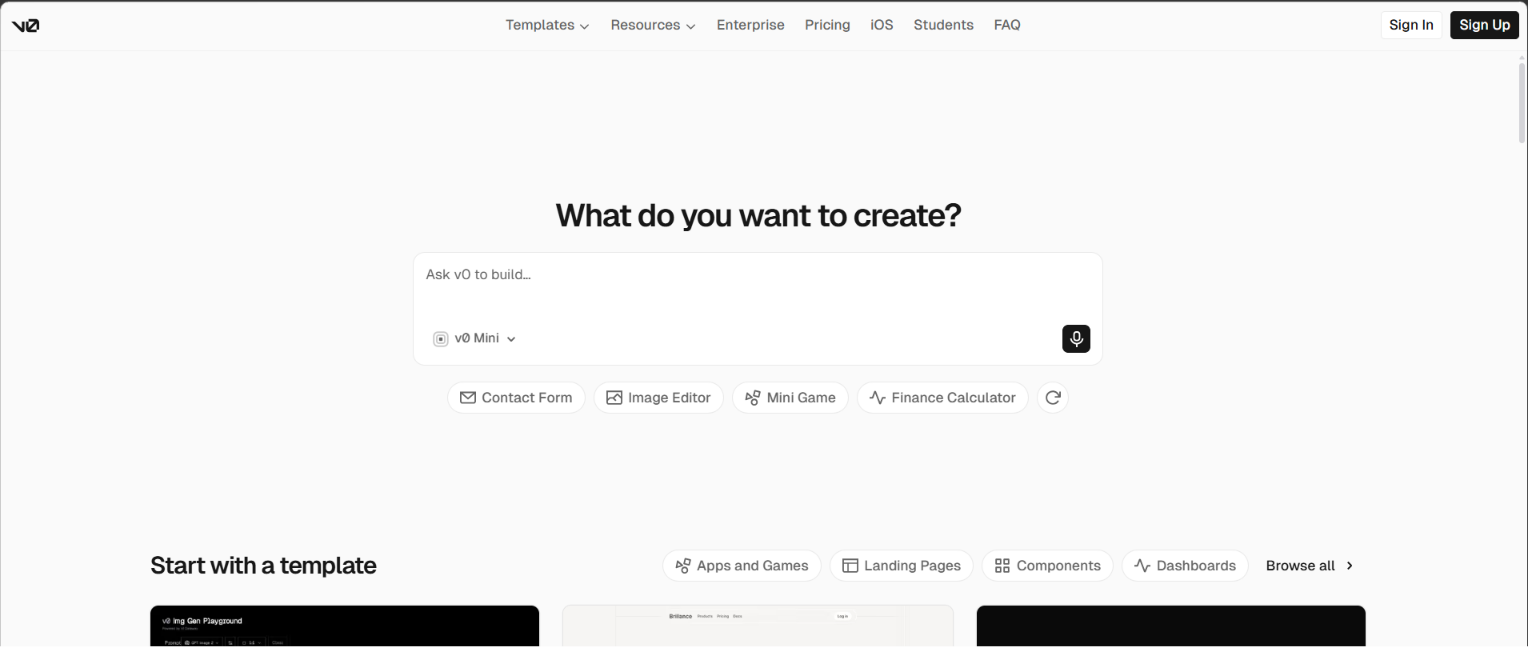
v0 generates React and Next.js code that other builders' output rarely matches for structure and idiom. GitHub sync, Vercel deployment and a design mode for adjusting UI without prompting make it a complete workflow rather than just a generator.
Pricing: Free includes $5 in monthly credits and up to 7 messages per day. Plus is $30 per user per month with $30 in monthly credits plus $2 in daily login credits.
The catch: the happy path is Next.js deployed to Vercel. Other frameworks are second-class citizens, and credits are dollar-denominated model usage, so a heavy refactor can eat an allowance quickly.
Best for: teams already standardized on the Vercel stack. The v0 vs Bolt comparison covers this pair directly.
4. Replit — best all-in-one cloud workspace
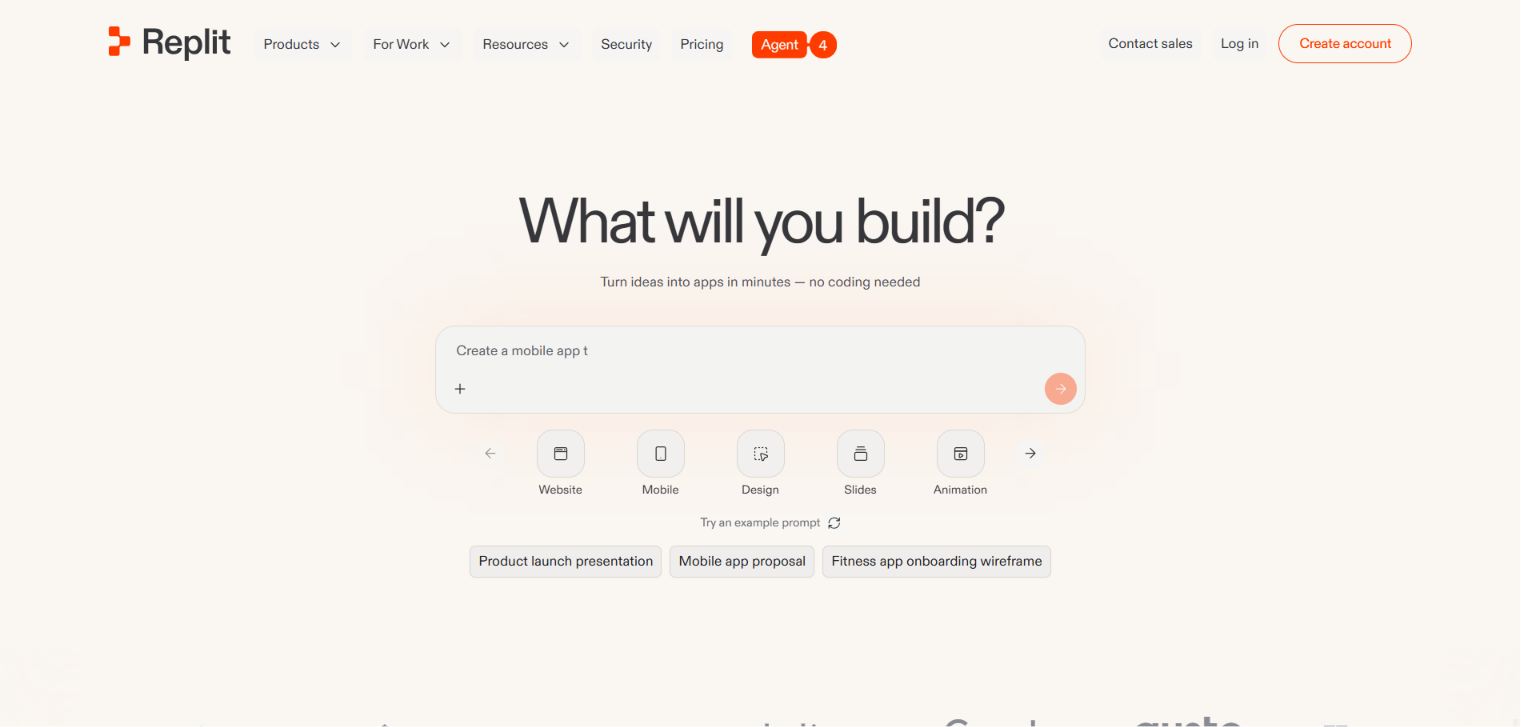
Replit is broader than any prompt-to-app builder: a real code editor, a runtime, databases, authentication, collaboration and deployment in one browser workspace. Where Bolt hands you a generated project, Replit hands you a place to actually work on it.
Pricing: the Starter plan is free with limited access. Core costs $20/month billed annually ($25 monthly) and includes $25 in monthly Agent credits. Pro is around $100/month with higher limits.
The catch: Agent credits deplete quickly on complex projects, and usage-based costs are hard to predict — a common reason people shop for alternatives to Replit too.
Best for: learners and teams who want editor, runtime and deployment together. The Bolt vs Replit article breaks down that pair.
5. Cursor — best if you want AI inside your own repository
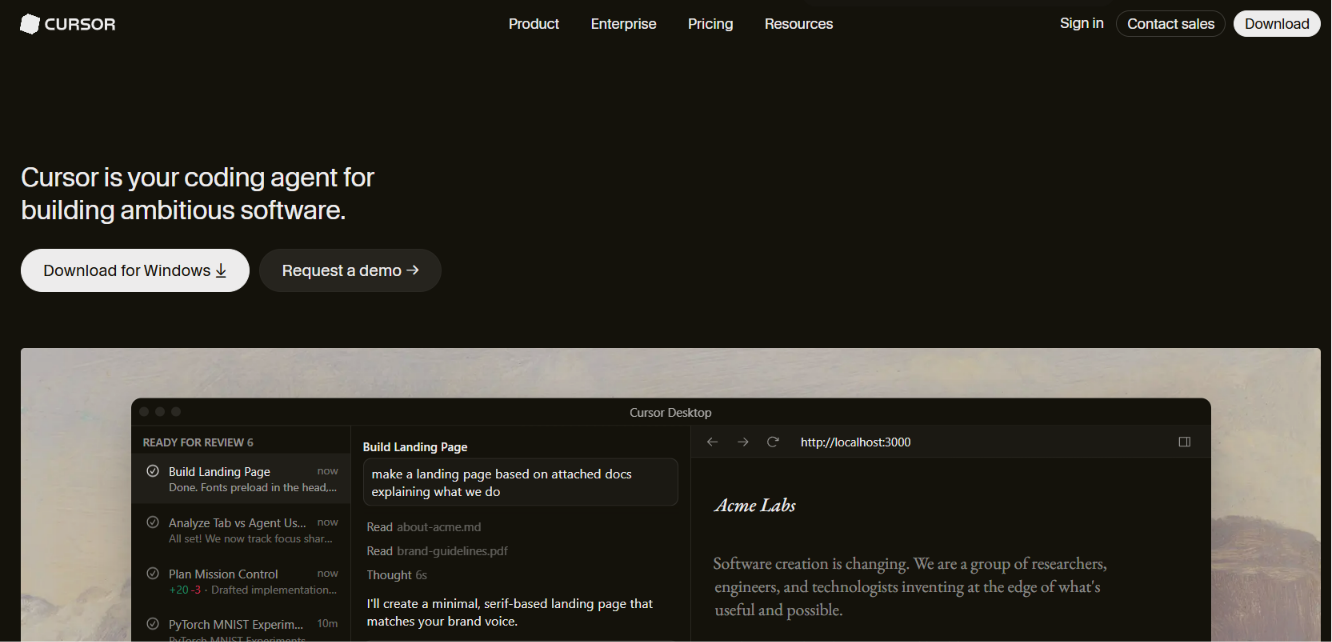
Cursor is an AI-first code editor built on VS Code. It will not deploy an app for you, and it will not pretend a prompt is a product. What it does give you is AI that reads your whole repository, edits across files and runs in an environment you control.
Pricing: a limited free Hobby plan; Pro from $20/month.
The catch: you assemble the runtime, database and deployment yourself. It is a tool for people who can already code, not a shortcut around coding.
Best for: developers with an existing repository who want AI assistance without platform lock-in. See Bolt vs Cursor for the trade-offs.
6. Base44 — best for business apps with a managed backend
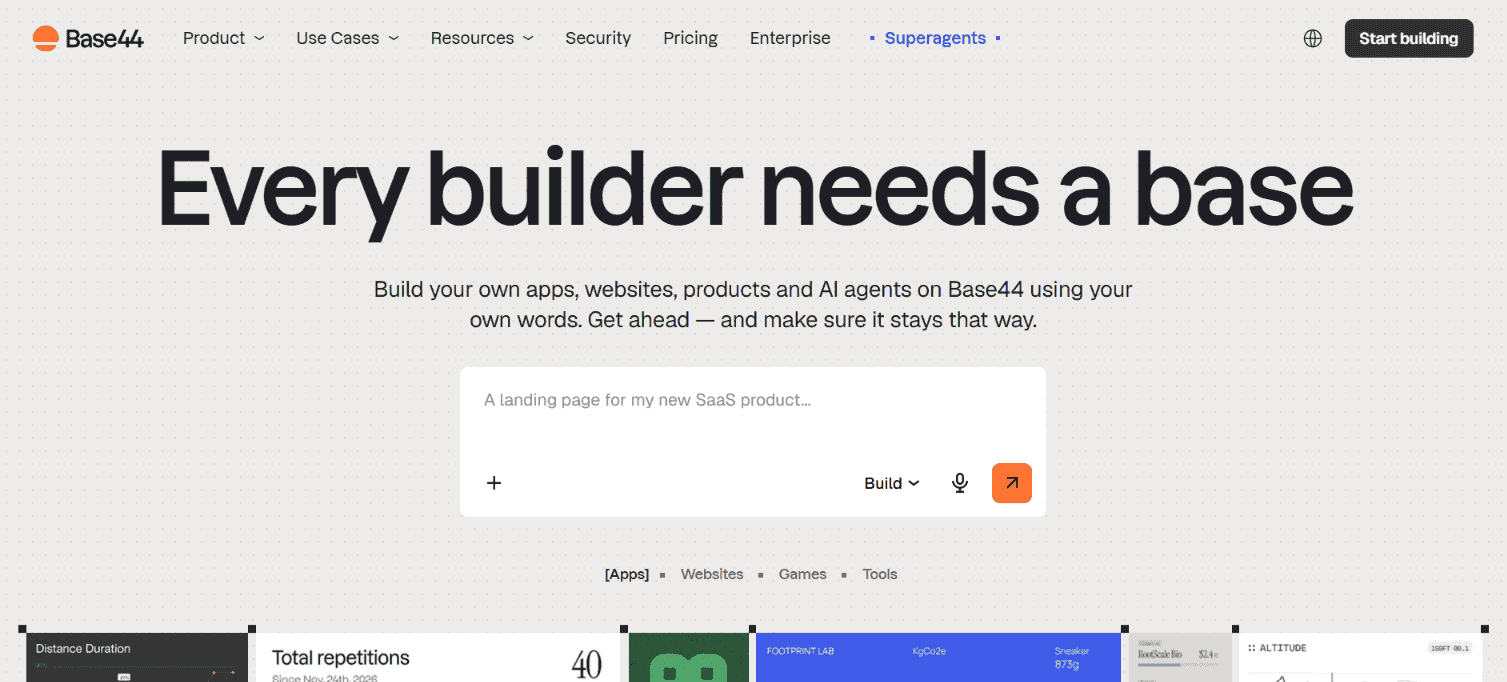
Base44 targets internal business tools — portals, dashboards, approval workflows — and includes authentication, a database and analytics even on the free plan, so the boring parts of a business app are handled.
Pricing: Free includes 25 message credits, 100 integration credits per month and up to five apps. Starter is $16/month billed annually with 100 messages and 2,000 integration credits. Two-way GitHub sync exports the full source.
The catch: a smaller ecosystem and less control over your stack than code-first alternatives.
Best for: operations and business teams that need working internal tools more than framework choice.
Bolt.new pricing explained
| Plan | Price | What you get |
|---|---|---|
| Free | $0 | 300K tokens/day, 1M/month; hosting; Bolt branding |
| Pro | $25/month | ~10M monthly tokens; no daily cap; rollover; custom domains |
| Pro 50 | $50/month | ~26M monthly tokens |
| Pro 100 | $100/month | ~55M monthly tokens |
| Teams | from $30/member/month | Shared workspaces and pooled usage |
The number that matters is not the headline allowance but the cost of your fifth change. Tokens fund reading your codebase, resending context and retrying failed edits, so the same feature costs more to build in week four than in week one. If your project will need sustained iteration, budget against the paid tiers from the start.
How to choose the right Bolt.new alternative
- Choose Ideavo if you already pay for an AI subscription, want the code in your own GitHub and prefer flat platform costs over metered tokens.
- Choose Lovable if first impressions matter and you are building a client-facing web app.
- Choose v0 if your team standardizes on Next.js and deploys to Vercel anyway.
- Choose Replit if you want an editor, runtime, database and deployment in one teaching-friendly workspace.
- Choose Cursor if you are a developer who wants AI inside a real editor on your own machine.
- Choose Base44 if you are building internal business tools and want the backend managed for you.
Whatever two finalists you land on, run the same test in both: a task list where a signed-in user sees only their own tasks after a page refresh. Then check where the data lives, how a failed save is handled, and whether you could hand the code to a developer tomorrow. The how to build an app with AI walkthrough shows each checkpoint in detail.
Frequently asked questions
Common questions about switching away from Bolt.new.
What is the best free Bolt.new alternative?
Ideavo is the strongest free alternative if you already have AI access, because the core builder is free and you connect your own provider, and Bolt's own free tier of 300K tokens per day remains one of the most generous in the category.
Is Bolt.new still free in 2026?
Yes. The free plan includes 300,000 tokens per day capped at 1 million per month, with hosting and unlimited databases included. Bolt branding stays on free deployments, and unused tokens do not roll over.
Which Bolt.new alternative lets you export your code?
All six tools in this list provide code export or GitHub workflows: Ideavo, Lovable, v0, Replit, Cursor and Base44. The differences are in workflow — Ideavo, v0 and Base44 sync through GitHub, while Cursor works directly in your own repository.
Why do Bolt tokens run out so fast?
Tokens are consumed by the whole conversation, not just new code. Resending context on each turn, reading files, retries and failed edits all draw from the same allowance, so costs accelerate as the project and its history grow.
Is Bolt.new good for production apps?
It can be, for small to mid-sized apps with steady iteration. The risks are cost predictability on long projects and reviewing a large generated codebase through chat. Test how you would hand the project to a developer before committing to production use.
Is Ideavo really free?
Ideavo's core builder is free, and you bring your own AI subscription or API key, so your chosen provider may charge for model usage. The optional Pro plan costs $20 per month.